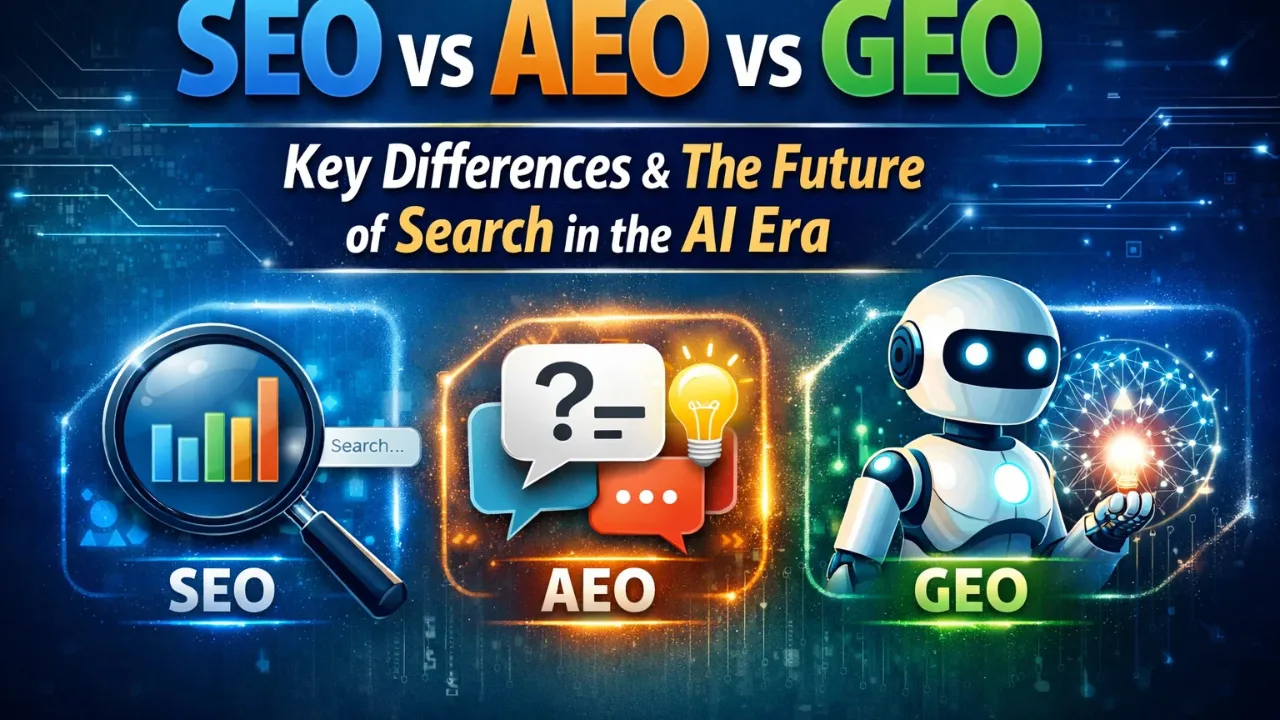


The Evolution of Search Engine Optimization has come a long way. What once was all about keywords, meta tags, and link-building has evolved into a multidimensional discipline that must now consider AI-driven answers, voice search, and generative engines. In this article, we explore the evolution of search engine optimization, including SEO, AEO (Answer Engine Optimization), and GEO (Generative Engine Optimization). We’ll explain Evolution of Search Engine Optimization and what each term means, how they differ, and how you can incorporate all of them into your digital strategy.
Table of Contents
Toggle1. Traditional SEO: The Foundation
For years, SEO (Search Engine Optimization) has been the backbone of digital visibility. The core objective: rank your pages higher in search engine result pages (SERPs) for relevant queries. Key components include:
-
Keyword research: finding words/phrases your audience uses
-
On-page SEO: optimizing titles, headers, content, internal linking
-
Off-page SEO / backlinks: earning links from authoritative sites
-
Technical SEO: improving site speed, mobile-friendliness, crawlability, schema
-
Content quality & relevance: user-first content that satisfies intent
SEO remains critical — it drives organic traffic, builds domain authority, and supports other strategies. But the landscape is shifting.
2. AEO – The Rise of Answer Engine Optimization-Evolution of search engine optimization
As search evolves, users increasingly expect direct answers without clicking through links. That’s where AEO (Answer Engine Optimization) comes in. AEO is about optimizing content so that search engines and AI assistants can pull concise, correct answers directly from your content — for example, in featured snippets, “People Also Ask”, or voice search responses.
Key Features of AEO:
-
FAQ & Q&A content: clear question + short answers
-
Concise responses (often 40–60 words) placed early
-
Schema markup (FAQ Page, QA Page) so search engines recognize answer content
-
Heading formats with questions (e.g. “What is GEO?”)
-
Natural, conversational language (matching voice search patterns)
AEO helps you capture zero-click traffic — where users get the info they want right on the search page.
Why AEO Matters:
-
Voice Search Dominance: Users increasingly ask questions like “What is AEO?” or “How does GEO impact SEO?”
-
Featured Snippets: Google’s “position zero” results pull short, structured answers from websites.
-
Zero-Click Searches: Many users now find what they need directly on the results page.
How to Optimize for AEO:
-
Create FAQ sections with clear, short answers.
-
Add structured data markup (FAQPage or QAPage schema).
-
Use conversational keywords and question-based headings.
-
Keep answers concise — ideally under 60 words.
By embracing AEO, your content becomes visible not just in text searches, but across voice, AI, and smart devices.
3. GEO – Generative Engine Optimization- Evolution of search engine optimization
GEO (Generative Engine Optimization) is the newer frontier. With the rise of AI-powered search experiences (like ChatGPT, Google’s SGE, Bing Chat), search is becoming generative — meaning the engine synthesizes answers by aggregating content from multiple sources. GEO focuses on ensuring your brand and content get cited or included in these AI-generated responses.
The Core Idea of GEO:
Instead of simply ranking pages, AI engines generate summaries and answers using information from multiple websites. GEO ensures your brand and content are among those sources AI cites or includes in its generated responses.
Core Principles of GEO:
-
Authoritative, trustworthy content that AI systems prefer citing
-
Structured content and metadata to help parsing and attribution
-
Entity optimization & consistency (brand mentions, accurate data)
-
Earned media & external citations (you want third parties citing you, since AI often sources from trusted signals)
-
Long-form, topical depth so AI has enough substance to draw from
Recent research shows that AI-driven engines bias toward sources with authority and external validation.
4. How SEO, AEO & GEO Work Together
These are not competing silos — they are complementary layers that together help your content thrive across different contexts:
| Strategy | Primary Aim | Best Use Cases |
|---|---|---|
| SEO | Improve rankings in traditional search | Blog posts, service pages, e-commerce |
| AEO | Capture direct answer spots, voice & snippet traffic | FAQs, informational content, “how-to” pages |
| GEO | Be included in AI-generated responses | Thought leadership, research content, well-cited authority content |
You should start with SEO fundamentals, layer in AEO-friendly structure, and build GEO-strength through authoritative content. Many optimization tactics overlap: good content, schema markup, strong internal linking, and trust signals all benefit each approach.
5. Implementation Tactics You Can Apply Today
Here are actionable steps to begin optimizing across SEO, AEO & GEO with will bring the evolution of search engine optimization process:
-
Start with keyword + question research
Use tools like AnswerThePublic, “People Also Ask”, or keyword planners to find natural questions people ask (e.g. “What is generative engine optimization?”). -
Structure your content for answers
Use headings like “What is…?”, “How does…?” and follow with succinct, precise answers. -
Use schema markup & structured data
FAQ schema, Article schema, and Q&A schema help search engines and AI understand your content. -
Cite credible sources & external references
Link and mention authoritative articles, studies, or expert sources. This increases your content’s trust factor for AI systems. -
Build external mentions & brand signals
Guest posts, press mentions, and third-party citations help your brand get recognized across the web — which is vital for GEO. -
Update, refresh & monitor AI responses
Periodically re-optimize high-performing pages. Use tools or manually check if your content is being cited in generative AI responses. -
Maintain technical health
Fast page speed, mobile optimization, proper indexing, and crawlable content are still foundational.
6. Challenges & Considerations
-
Opaque algorithms: AI engines don’t publish full ranking criteria.
-
Citation bias: AI models tend to favor big, authoritative brands.
-
Rapid change: What works now might evolve quickly — stay adaptable.
-
Balance click vs. zero-click: Sometimes you’ll trade traffic (clicks) for brand visibility (being quoted in answers).
Despite challenges, forward-thinking brands that invest early can gain a competitive advantage.
7. Future Outlook
As AI becomes more central to how people search, the role of SEO will expand. It won’t disappear — but it will merge with AEO and GEO into a unified optimization strategy. Brands that combine visibility in search, direct answers, and AI presence will dominate the digital landscape of tomorrow.
Want help optimizing for the next-gen of search?
The evolution of search engine optimization is an ongoing journey. From traditional SEO techniques to AEO and GEO, every step represents a smarter, more user-centric way of connecting people with information.
At Krawl Tech, we help businesses adapt to these changes with innovative strategies that combine technical expertise, creative content, and AI-driven insights. Whether you need help improving rankings, optimizing for voice search, or preparing for AI-powered search, our team is here to guide you.
We’re ready to support you. Visit our Homepage or go to our Contact Us page to schedule a consultation. Let’s future-proof your digital presence with SEO, AEO & GEO optimization.
For any query call us directly on: +91 8983831909 or visit us