
Table of Contents
ToggleIntroduction: Google Search Ads Labeling Update: What It Means for Marketers
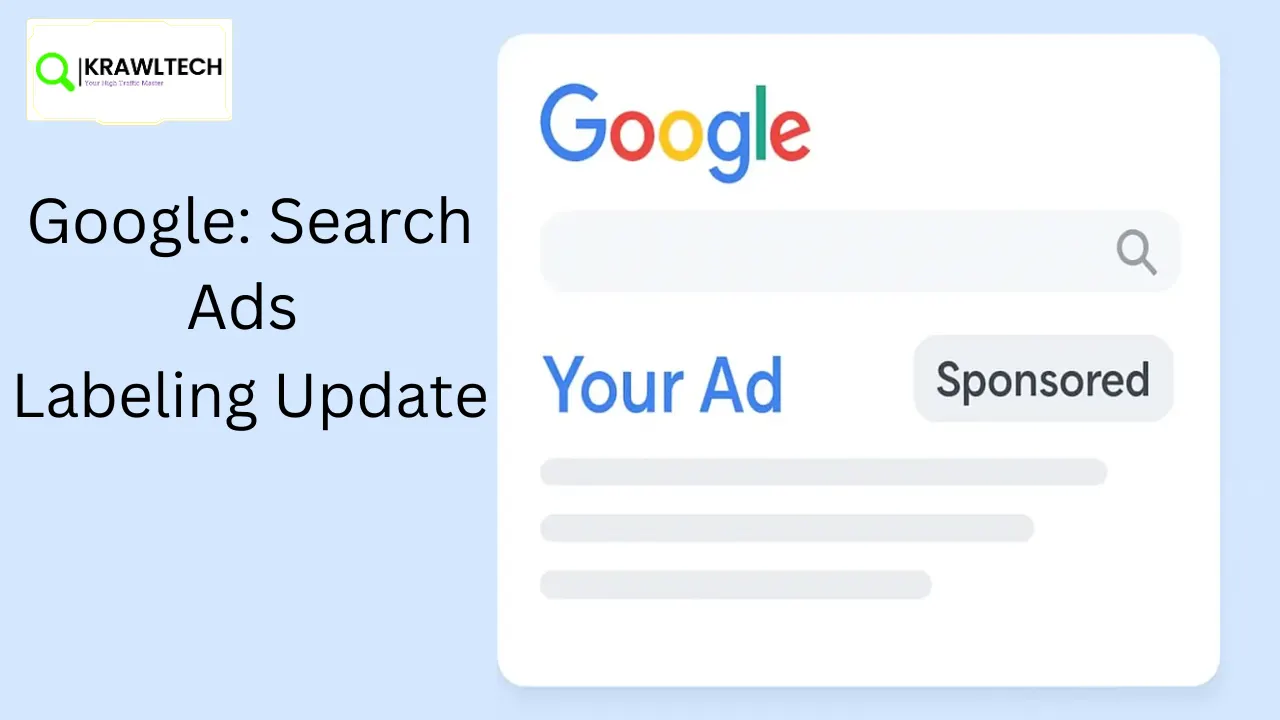
The landscape of paid search is evolving once again. Google Search Ads Labeling Update how search ads are presented in its results pages. Rather than each ad showing an individual “Sponsored” label, Google now groups all text ads under a unified header reading “Sponsored results”, which remains visible as users scroll.
For marketers and advertisers, this shift may seem only cosmetic, but appearance matters—and it can influence how users engage with ads. In this post, we’ll break down the changes, why Google made them, how they may impact ad performance, and what you should do to adapt.
What exactly is changing?
Unified Label & Ad Block
Previously, when you searched and saw text ads, each ad carried its own “Sponsored” tag at the top. With the update, Google is grouping all text ads together and putting a single header—“Sponsored results”—to mark the beginning of the block.
The header stays visible even as the user scrolls, increasing clarity around which results are paid.
Another new element: users now have the ability to collapse the entire sponsored ad block with one click. Google is rolling this out globally, across desktop and mobile.
Consistent Labeling Across Formats
Besides text ads, other formats — for example shopping placements — will now also use clearer labeling such as “Sponsored products”.
When AI-generated result snippets appear, the ad block might show either above or below them, but the labeling format remains consistent.
Why did Google make this change?
Google says the changes were driven by user testing and feedback. The main goals: increase transparency, make ad labeling more consistent across formats, and maintain user trust in the search results page (SERP) as the interface evolves—especially with more AI-led features.
In other words: although the mechanics of ad serving (bids, ranking, Quality Score) are unchanged, how users perceive the ads is shifting.
Even though the underlying auction logic hasn’t changed, the way ads are presented can influence user behaviour — which in turn may affect key metrics like click-through rate (CTR) or conversion rate.
Here are some of the expected effects and strategic implications:
1. Increased visibility of the “Sponsored” label
Because the label is more prominent and consistent, users may become more aware of which results are paid. This could lead to a smaller “blind click” pool — i.e., users who click without realizing a result is an ad.
Implication: Ads must deliver clearer value, stronger messaging, and better alignment with user intent.
2. Potential shift in CTR and engagement
For lower-intent queries, users might skip the ad block entirely or hide it via the collapse option, reducing volume. For high-intent queries, the impact may be minimal.
Implication: Pay attention to relative performance shifts by intent type, query category, device type, and vertical.
3. Greater emphasis on ad creative & relevance
Since ad placement and structure stay the same, what differentiates your performance is the ad’s messaging and alignment with searcher intent. With higher transparency, users’ tolerance for “meh” ads may decrease.
Implication: Refine your ad copy, ensure relevance to query intent, strengthen unique value proposition, and test ad formats accordingly.
4. No need to overhaul entire campaign mechanics — but monitor
Google clarifies that bid strategy, Quality Score, ranking, and ad volume cap (e.g., maximum of four text ads) remain unchanged.
Implication: Your core PPC structure may stay intact — but the presentation changes mean you still need to monitor performance closely and optimise where needed.
Actionable steps for advertisers
Here are recommended steps you should take now, given the new labeling update:
-
Review current ad blocks & placements: See how your ads appear in SERPs under the new label. Check desktop and mobile.
-
Track key metrics closely: Set a baseline for CTR, conversion rate, impression share by query intent (high vs low), device type, vertical. Monitor for changes.
-
Segment by search intent: For top-of-funnel, low-intent queries, consider tailored ad messaging that addresses inertia or awareness. For bottom-of-funnel, emphasise urgency & conversion.
-
Test ad creative variations: Since users may be more aware they’re clicking a paid result, make your ad copy more transparent and value-driven.
-
Refine landing pages: Ensure the landing experience delivers on the ad promise—mismatch risk is higher when ad visibility is clearer.
-
Consider user behaviour around hiding ads: Though not everyone will collapse the ad block, the option to hide may lead to gradual shifts. Be ready to adapt if you see trends.
-
Maintain focus on Quality Score & relevance: Because the auction rules haven’t changed, core fundamentals still apply. But as user behaviour evolves, relevance and user experience will matter more.
Looking ahead: broader implications for SERP & PPC
Google’s update is part of a larger trend: presentation and user experience are becoming increasingly integral in the search ecosystem. As AI-generated content becomes more prevalent, and as user expectations around transparency rise, how ads are labelled and displayed will become more critical.
Advertisers who stay ahead by focusing on clarity, relevance and user value will be better positioned.
In essence: your ad might appear in the same slot, but how a user sees it is changing—and that difference can impact results.
Conclusion
The “Sponsored results” labelling update by Google doesn’t change the mechanics of PPC, but it does shift the ground in terms of user perception and behaviour. As an advertiser, recognising this change early and adjusting your creative, measurement and strategy accordingly will put you in a strong position.
Focus on ad relevance, user intent alignment and monitoring performance shifts. The ads you served yesterday may still serve—but the way they’re seen today is different.
Stay flexible, test thoughtfully, and keep delivering value. For more information Stay in touch with us or contact us.
Visit Us